
Auto Painting
Protecting your vehicle’s paint has never been more important or more confusing. With multiple options available, such as paint protection film and ceramic coating, choosing the right one can feel overwhelming.
At Stuart’s Paint & Body, we’ve spent over 40 years helping clients make informed decisions about vehicle protection, and we understand that every car and owner has unique needs.
The debate of ceramic coating vs. paint protection film isn’t about finding a clear winner. Instead, it’s about understanding which solution best fits your driving habits, budget, and protection goals. Both options offer significant benefits, but they work in fundamentally different ways.
Our experience with luxury brands like Porsche, Maserati, and Subaru has taught us that informed decisions lead to satisfied customers. Let’s break down everything you need to know about PPF and ceramic coating to help you make the right choice for your vehicle.
Understanding Paint Protection Film (PPF)
Paint Protection Film, commonly called PPF or clear bra, is a transparent thermoplastic urethane film applied directly to your vehicle’s painted surfaces. This technology originated in the military to protect helicopter rotor blades from debris damage.
Modern PPF offers self-healing properties, meaning minor scratches and swirl marks disappear with heat application. The film typically ranges from 6 to 12 mils thick, providing substantial physical protection against road debris, rock chips, and other impacts.
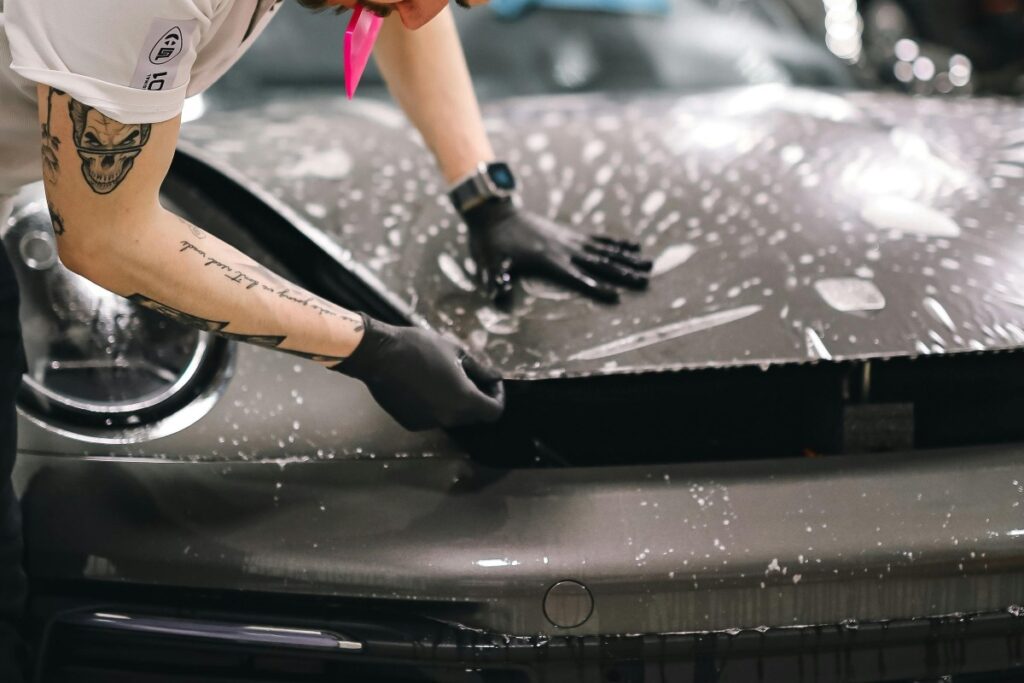
PPF installation requires professional expertise and specialized tools. The film must be precisely cut and applied to follow your vehicle’s contours perfectly. Quality installation prevents bubbling, peeling, and edge lifting that can compromise protection.
Understanding Ceramic Coating
Ceramic coating consists of a liquid polymer that chemically bonds with your vehicle’s paint, creating a permanent protective layer. This nanotechnology forms a hydrophobic surface that repels water, dirt, and many contaminants.
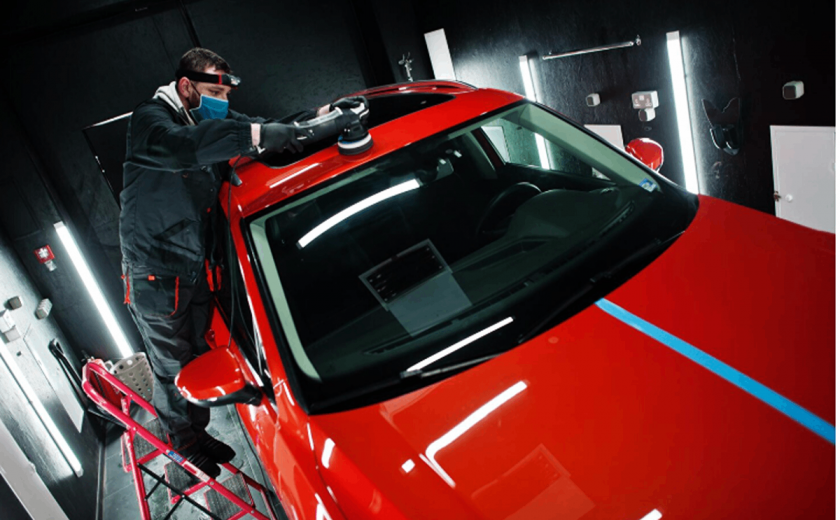
The coating process involves thorough paint preparation, including correction of any existing imperfections. Once applied, ceramic coating typically requires 24-48 hours to cure completely, during which the vehicle must remain dry and protected.
Professional-grade ceramic coatings offer superior durability compared to consumer products. The chemical bond with paint creates long-lasting protection that doesn’t wash away like traditional waxes or sealants.
Comparing Protection Levels
| Protection Type | PPF | Ceramic Coating |
|---|---|---|
| Rock chip resistance | Excellent | Minimal |
| Scratch protection | Very good | Good |
| UV protection | Excellent | Excellent |
| Chemical resistance | Good | Excellent |
| Self-healing ability | Yes | No |
| Impact protection | Excellent | Minimal |
When comparing paint protection film vs. ceramic coating for physical protection, PPF clearly excels. The thick film absorbs impacts that would otherwise chip or scratch your paint. Rock chips, road debris, and minor parking lot mishaps bounce off quality PPF without leaving permanent damage.
Ceramic coating provides excellent protection against environmental contaminants. Bird droppings, tree sap, acid rain, and road salt have difficulty bonding to the coated surface, making removal easier and preventing permanent etching.
Both options offer outstanding UV protection, preventing paint oxidation and fading. However, they achieve this protection through different mechanisms and offer varying degrees of additional benefits.
Installation Process and Requirements
PPF installation demands significant skill and experience. The process involves:
- Surface preparation: Thorough cleaning and decontamination
- Template creation: Precise measurement and cutting
- Application: Careful positioning and squeegee work
- Trimming: Exact edge finishing
- Heat activation: Conforming to curves and activating the adhesive
Professional PPF installation typically takes 1-3 days, depending on the coverage area. Full-vehicle wraps require more time than partial applications like front-end protection.
Ceramic Coating Application Steps:
- Paint inspection and correction
- Deep cleaning and decontamination
- Surface preparation with specialized products
- Coating application in a controlled environment
- Curing period monitoring
- Final inspection and quality check
Both processes require climate-controlled environments and professional expertise. DIY attempts often result in poor outcomes that require professional correction.
Durability and Longevity
Quality PPF typically lasts 7-10 years with proper care. The film may show signs of aging, such as slight yellowing or reduced self-healing ability, toward the end of its lifespan. However, removal and replacement restore like-new protection.
Professional ceramic coatings can last 2-5 years, depending on quality and maintenance. Higher-grade coatings offer longer protection periods but require greater initial investment.
Both PPF and ceramic coating longevity depend heavily on maintenance practices. They require specific care routines to maximize their protective lifespan and maintain appearance.
Maintenance Requirements
PPF maintenance focuses on preserving the film’s clarity and self-healing properties:
- Regular washing with pH-neutral products
- Avoiding automatic car washes with brushes
- Using PPF-safe cleaning products
- Periodic professional inspections
- Heat application for self-healing activation
Ceramic coating maintenance emphasizes maintaining the hydrophobic properties:
Ceramic Coating Care Routine:
- Weekly washing with appropriate products
- Monthly decontamination to remove bonded contaminants
- Quarterly inspection for coating integrity
- Annual maintenance coating application if needed
- Professional assessment every 2-3 years
Both protection methods require more careful maintenance than unprotected paint, but they also make cleaning easier and more effective.
Cost Considerations
Initial investment varies significantly between ceramic coating and paint protection film options. PPF generally requires higher upfront costs due to material expenses and labor-intensive installation.
Partial PPF coverage (front bumper, hood, mirrors) costs less than full-vehicle protection. Many owners choose strategic placement in high-impact areas to balance protection and budget.
Ceramic coating costs depend on coating quality and preparation requirements. Vehicles needing paint correction before coating application will incur additional expenses.
Long-term value calculations should include maintenance costs, longevity, and resale value protection. Both options can enhance vehicle value, but the degree varies based on vehicle type and market conditions.
Performance in Different Conditions
Paint protection film and ceramic coating performance vary significantly across different driving conditions and climates.
Highway driving with frequent rock chip exposure heavily favors PPF protection. The physical barrier prevents damage that ceramic coating cannot stop.

Urban driving with parking challenges benefits from PPF’s scratch and scuff resistance. Door dings, shopping cart contacts, and other minor impacts cause less damage to protected surfaces.
Climate and weather considerations affect both options differently. PPF performs well in all weather conditions but may yellow slightly in extreme UV environments over time.
Ceramic coating excels in areas with heavy pollution, frequent rain, or harsh winters. The chemical resistance helps prevent permanent staining and etching from environmental contaminants.
Aesthetic Considerations
Both protection methods can enhance your vehicle’s appearance when properly applied. PPF adds slight depth to paint while maintaining complete transparency when new.
High-quality PPF installation is virtually invisible, preserving your vehicle’s original appearance. Poor installation, however, can create visible edges, bubbles, or orange peel texture.
Ceramic coating enhances paint gloss and depth, often making colors appear more vibrant. The hydrophobic effect creates impressive water beading that many owners find satisfying.
Some ceramic coatings offer matte finishes for vehicles with factory matte paint. PPF also comes in matte options to preserve original finishes.
Combining Both Technologies
Many luxury vehicle owners choose to combine PPF and ceramic coating technologies for maximum protection. This approach typically involves applying PPF to high-impact areas and ceramic coating to the entire vehicle.
The combination provides comprehensive protection against both physical damage and environmental contamination. PPF handles impacts while ceramic coating protects against chemicals and enhances cleaning ease.
Installation timing matters when combining technologies. PPF typically goes on first, followed by ceramic coating application over the film and exposed paint areas.
Cost increases significantly with combined protection, but so does the level of comprehensive coverage. This approach makes sense for high-value vehicles or those exposed to harsh conditions.
Making the Right Choice
Choosing between paint protection film and ceramic coating requires an honest assessment of your priorities:
Consider PPF if you:
- Drive frequently on highways or gravel roads
- Park in areas with high door ding risk
- Want maximum physical protection
- Plan to keep your vehicle long-term
- Have a high-value or specialty vehicle
Choose ceramic coating if you:
- Prioritize ease of cleaning and maintenance
- Deal with heavy environmental contamination
- Want enhanced gloss and appearance
- Have budget constraints for full PPF coverage
- Drive primarily in urban environments
Vehicle type also influences the decision. Sports cars and luxury vehicles often benefit more from PPF due to exposed front ends and paint repair costs. Daily drivers might find ceramic coating sufficient for their protection needs.
Professional vs. DIY Options
Professional installation ensures optimal results for both ceramic coating and paint protection film applications. The tools, environment, and expertise required make DIY attempts risky for most owners.
Consumer-grade ceramic coatings exist but offer significantly less durability and protection than professional products. The preparation requirements remain the same regardless of product quality.
DIY PPF kits are available, but extremely challenging to install properly. The unforgiving nature of the material means mistakes often require a complete restart with a new film.
We recommend professional installation for both technologies. The investment in proper application pays dividends in performance, appearance, and longevity.
Future Technology Developments
Both PPF and ceramic coating technologies continue evolving. Newer PPF formulations offer better clarity, improved self-healing, and enhanced durability.
Ceramic coating chemistry advances focus on easier application, longer durability, and improved performance characteristics. Some newer coatings claim 7-10 year lifespans with proper maintenance.
Graphene-enhanced coatings represent the latest development in ceramic technology. These products promise improved durability and performance, though long-term real-world data remains limited.
Final Thoughts
The choice between paint protection film and ceramic coating ultimately depends on your specific needs, driving conditions, and budget. Both technologies offer substantial benefits over unprotected paint, but they excel in different areas.
At Stuart’s Paint & Body, we’ve seen both technologies protect countless vehicles over our 40+ years in business. Our Porsche, Maserati, and Subaru certifications have given us extensive experience with high-end protection applications.
The best protection strategy often involves understanding your vehicle’s exposure risks and choosing the technology that addresses your primary concerns. Whether you choose PPF, ceramic coating, or a combination approach, professional installation and proper maintenance are key to achieving optimal results.Ready to protect your vehicle with the right solution? Contact us and discover which protection option best fits your needs and lifestyle!